Mirrors · Galvo Scanning
Scanning Mirrors: Lightweight Galvo Mirrors for Two-Axis Scanning
Lightweight rectangular galvo scanning mirrors with 99.5% or above reflectivity, sized to your beam for two-axis laser scanning. Contact Wavelength Optics USA.
Reflectivity, or above
Catalogue part numbers
Axis-specific mirrors and sets
Sized to your beam
Full catalogue
0 matching parts
| Part Number▲ | Product Type▲ | Beam Size (mm)▲ | Material▲ | X/Y▲ | Dimension L x W x T (mm x mm x mm)▲ |
|---|
No parts match these filters. .
Scanning mirrors are lightweight rectangular galvo mirrors built for high-speed two-axis laser scanning systems. Each mirror is mounted onto a galvanometer, and its dimensions are calculated from the laser beam size it has to handle. The mirrors are designed with a reflectivity of 99.5% or above. Whether you’re building a 3D printing head, a dynamic 3D scanning system, or a galvo-based laser marking or processing station, these mirrors are the moving optics that steer your beam across the work area.
How the X and Y mirrors work together
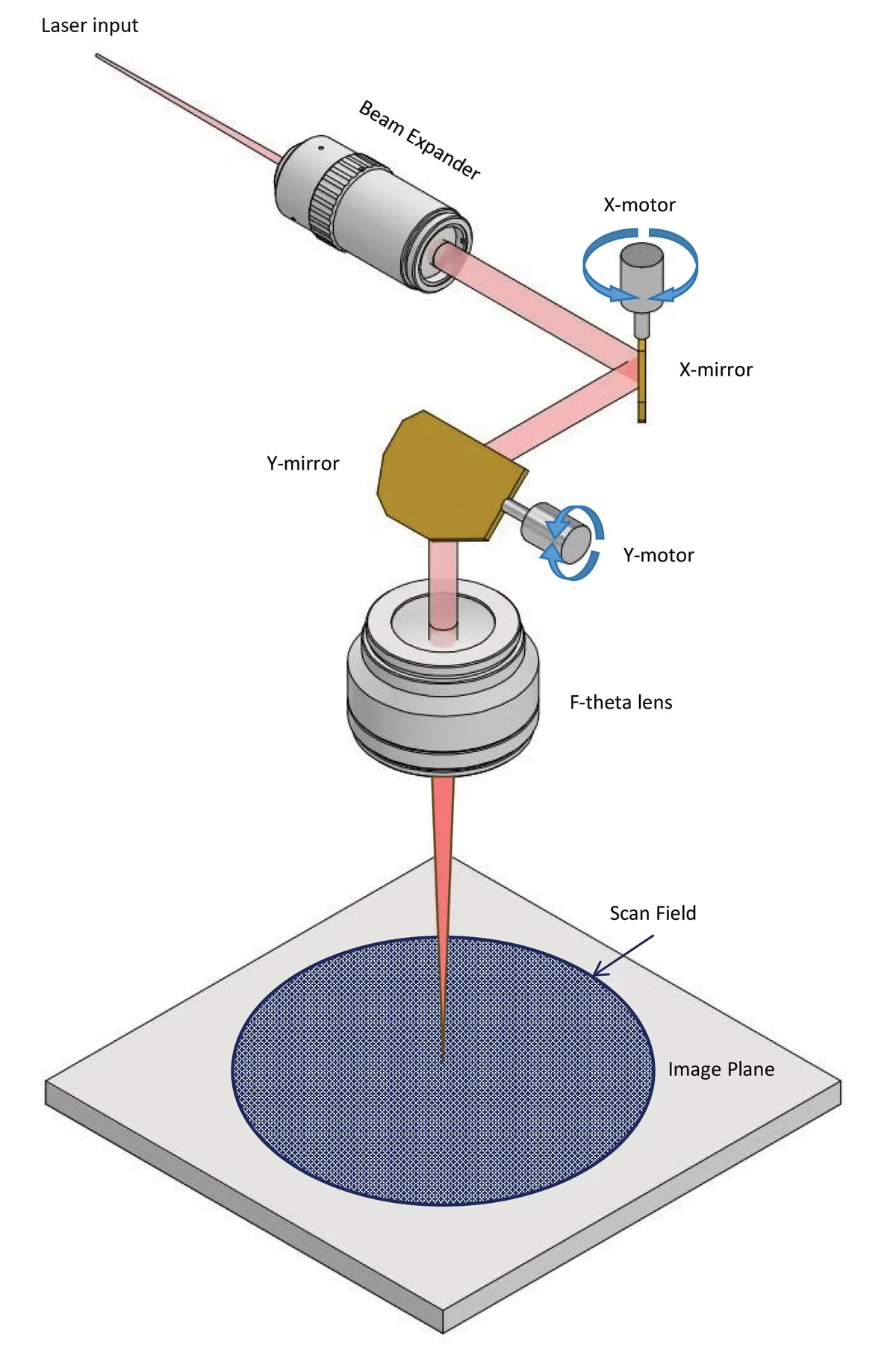
In a two-axis galvo scanner, the beam reflects off two mirrors in sequence, each driven by its own galvanometer. The first (X) mirror deflects the beam onto the second (Y) mirror, which then directs it to the workpiece or the scan lens.
This arrangement is why the two mirrors are usually different sizes. The X mirror sees a beam that stays in roughly one place on its surface. The Y mirror has to capture that beam as the X mirror sweeps it back and forth, so the beam footprint moves across the Y mirror’s face. The Y mirror is therefore commonly made larger than the X mirror. Put simply, the X mirror scans the Y mirror rather than scanning the object directly.
Wavelength offers:
- X-axis mirrors, sized for the first deflection stage
- Y-axis mirrors, sized to accept the swept beam from the X mirror
- Two-axis scan mirror sets, matched X and Y pairs for a complete scan head
The catalogue covers 42 part numbers. The spec table on this page lets you filter by product type, beam size, material, axis (X or Y), and length, width and thickness, so you can find a mirror that matches your galvanometer and beam diameter.
Why mirror size and weight matter
A galvo mirror is a moving part, and its size directly affects how the scanner performs. A mirror that is too small for the beam clips the edges and wastes power. A mirror that is larger than needed adds inertia the galvanometer has to accelerate and stop on every move, which can limit how quickly the scanner settles. That is why these mirrors are made lightweight and why their dimensions are worked out from the beam size instead of using a single standard blank.
High reflectivity matters for the same reason. The beam reflects off two mirrors before it leaves the scan head. Keeping reflectivity at 99.5% or above on each surface limits power loss through the pair and reduces heat absorbed into the mirrors.
Applications
- 3D printing and additive manufacturing: steering the laser across the powder bed or resin layer in galvo-based systems.
- 3D dynamic scanning: systems that move the focal plane as well as the X and Y position, used for processing contoured or uneven parts.
- Laser scanning: marking, engraving, cutting and other galvo-driven laser processing in industrial equipment, along with scanning tasks in inspection and imaging setups.
Custom sizes and buying through Wavelength Optics USA
If a catalogue part doesn’t match your galvanometer or beam, mirrors can be made to your specification. Send your beam size, axis configuration and any mechanical constraints through the RFQ form, and the mirror dimensions will be calculated to suit.
Working with Wavelength Optics, the US arm of Wavelength Opto-Electronic, gives you:
- Local support from a team in your time zone, so questions about fit, mounting or substitutions don’t wait on overseas office hours.
- Fast quoting on catalogue parts and custom requests, handled through the US entity.
- Technical consultation on selection. If you’re unsure whether to size from the nominal beam diameter or allow margin for the full scan angle, or how to pair X and Y mirrors for an existing scan head, our engineers can work through it with you before you commit to a design.
Tell us about your scanner and beam, and we’ll help you specify the right mirror set.
Need Help Choosing the Right Model?
Our photonics specialists can help you select the optimal configuration for your system. Custom specifications available on request.